
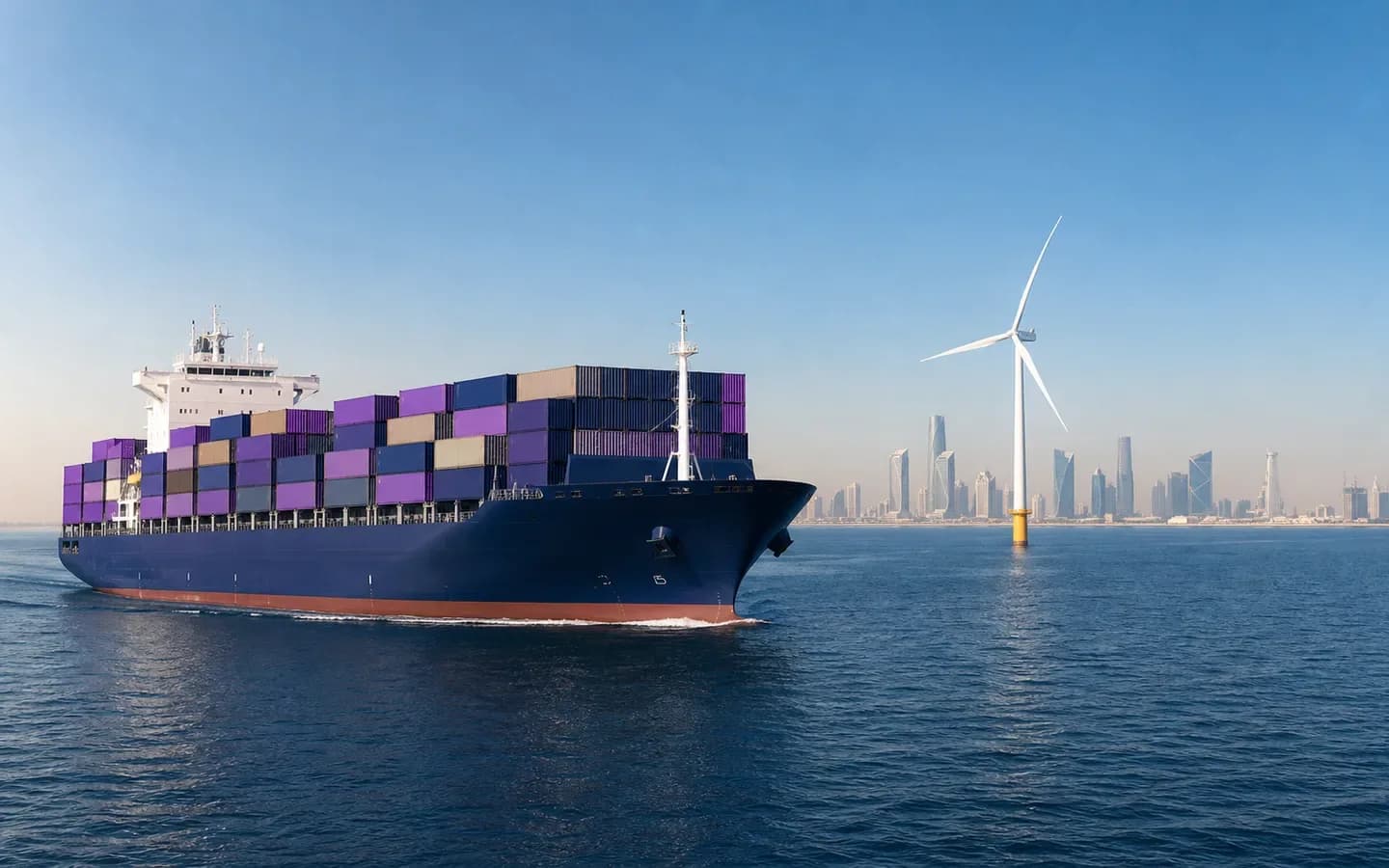
The global landscape of energy security is undergoing profound transformation, as the world increasingly relies on maritime routes to transport more than half of its oil trade and significant volumes of liquefied natural gas. Critical maritime corridors have become essential pathways through which vast quantities of energy flow daily, while an intricate network of subsea pipelines—stretching nearly one million kilometers, forms the deep infrastructure of the international energy system. These networks operate as vital arteries that connect economies, influence market trends, and shape global trade dynamics.
With this growing dependence, attacks on maritime infrastructure have surged by more than 300% over the past decade, according to international energy security reports. This escalation has exposed vulnerabilities within the maritime system and prompted a redefinition of maritime security to encompass subsea environments, strategic corridors, pipeline networks, and the digital infrastructure that governs them. In this context, securing maritime energy supply chains has become a fundamental requirement for global economic stability.
Against this backdrop, the fourth edition of the Saudi International Maritime Forum emerges under the theme “The Future of Seabed Security & Maritime Supply Chains in a Critically Changing World.” The theme reflects a direct response to global shifts and presents a unified international framework for addressing the future of energy security across the seas integrating strategic, technical, and economic dimensions within a Saudi-led global platform for dialogue and cooperation.
The Seas: The New Strategic Frontier of Global Energy The world’s oceans have evolved beyond their traditional role as navigation routes to become strategic domains where national interests intersect and critical commodities move across continents. Major maritime corridors from the Strait of Hormuz to the Red Sea now serve as pivotal arteries of the global energy system, carrying millions of barrels of oil each day and linking production hubs in the Arabian Gulf with consumption centers in Asia and Europe.
These corridors are more than geographical lines; they are economic lifelines that influence energy prices, shape market behavior, and determine the capacity of nations to plan for the future. Any disruption within these routes quickly escalates into a global crisis, affecting shipping costs, industrial supply chains, and international trade flows.
Beneath the surface, a complex network of subsea pipelines connects offshore fields to processing and distribution centers, forming a critical component of national energy security. As offshore investments expand, these networks have become increasingly exposed to unconventional threats, including sabotage, technical failures, and environmental challenges reinforcing the need for advanced protection and monitoring capabilities.
Escalating Risks: When the Sea Becomes a Theatre of Emerging Threats Recent years have witnessed a series of global disruptions that revealed the fragility of maritime energy supply chains. Certain incidents have driven shipping costs up by more than 350% and increased transit times by 30–50% when a single corridor was obstructed. These figures underscore how even minor disruptions can trigger global consequences, affecting energy prices, transportation costs, and industrial supply chains.
Reports also indicate a 300% rise in attacks targeting maritime infrastructure over the past decade, including offshore facilities, pipelines, and critical coastal assets. This surge has positioned maritime energy supply chain security at the forefront of strategic studies, defense planning, and global energy policies.
Saudi Arabia: A Central Force in the Global Maritime Energy System Saudi Arabia occupies a unique and influential position within the global maritime energy landscape not only as the world’s largest oil exporter but also as a nation strategically located along some of the most vital maritime corridors. Estimates indicate that nearly 40% of seaborne oil trade passes through routes connected to Saudi Arabia, underscoring the significance of Saudi maritime stability for global economic security.
This role is reinforced by advanced coastal infrastructure capable of handling more than seven million barrels per day, alongside operational systems designed to ensure the uninterrupted flow of energy across the seas. Within the framework of Saudi Vision 2030, the country prioritizes the protection of critical infrastructure and the enhancement of maritime security, paving the way for expanded production capabilities, strengthened corridor protection, and advanced monitoring systems for maritime energy supply chains.
Advanced Maritime Protection Systems: Readiness Beyond Conventional Boundaries Saudi Arabia’s leadership in maritime energy security is reflected in its development of advanced protection systems that include long-range monitoring technologies, subsea threat detection capabilities, and AI-driven analytical platforms capable of assessing risks in real time. These advancements come at a time when global maritime energy supply chains have experienced a 37% increase in disruptions, according to international research centers specializing in energy and logistics.
Such capabilities position Saudi Arabia as a stabilizing force in global markets, reinforcing confidence in the continuity of energy flows and strengthening its role as a key guardian of strategic maritime corridors.
Comprehensive Maritime Security: From Surface Protection to Seabed Defense Securing maritime energy supply chains requires an integrated approach that encompasses surface operations, subsea infrastructure protection, and coastal facility security. Protecting oil and gas carriers, pipelines, and offshore installations demands a unified maritime security framework capable of addressing traditional and emerging threats.
This holistic perspective is precisely what the Saudi International Maritime Forum offers an advanced platform for examining the future of maritime security amid accelerating global transformations.
4th Saudi International Maritime Forum A Global Platform for Maritime Security and Cooperation The fourth edition of the Saudi International Maritime Forum convenes under the theme “The Future of Seabed Security & Maritime Supply Chains in a Critically Changing World,” under the patronage of His Royal Highness Prince Khalid bin Salman bin Abdulaziz Al Saud, Minister of Defense, organized by the Royal Saudi Naval Forces, and delivered through the organizational excellence of Startime Events. The forum will take place from 23 to 25 November 2026 at the Sofitel Riyadh Hotel & Convention Center.
This edition arrives at a time when maritime environments are undergoing significant shifts, marked by intersecting technological, geopolitical, and economic challenges. It provides a global platform capable of presenting an integrated vision for maritime energy security one that strengthens supply chain resilience, protects deep-sea digital infrastructure, enhances maritime cybersecurity, and explores the role of emerging technologies in shaping the future of maritime defense.
The forum brings together military leaders, policymakers, maritime authorities, and global experts to build a shared understanding of evolving maritime challenges and develop collaborative models capable of safeguarding the energy systems that underpin the global economy. It reflects Saudi Arabia’s leadership in advancing international dialogue on maritime security and its pivotal role in protecting vital sea lanes in an era of rapid global change.
Startime Events A Strategic Partner in Shaping the Forum’s Institutional Model Since the inaugural edition of the Saudi International Maritime Forum in 2019, Startime Events has served as a dedicated organizational partner to the Royal Saudi Naval Forces, contributing to the development of the forum’s institutional identity and supporting its evolution into a global reference point for maritime security and supply chain resilience. This long-standing partnership reflects a deep operational alignment and a shared commitment to excellence in delivering high-level sovereign events.
Startime has played a central role in establishing a cohesive organizational framework for the forum one that integrates protocol precision, operational accuracy, and the ability to manage sensitive, high-profile engagements. The company continues to refine advanced operational systems that ensure seamless execution across all components of the event, from the scientific program and expert sessions to the coordination of international delegations and the facilitation of strategic dialogue.
Leveraging its membership in the Global Association of the Exhibition Industry (UFI), Startime builds an international media presence that amplifies the forum’s global significance and highlights its role in shaping the future of maritime and energy security. With each edition, the company strengthens its contribution by developing more mature organizational models aligned with the sovereign nature of the event and with Saudi Arabia’s position as a central force in safeguarding maritime corridors and supporting global energy stability.
A Timely Gathering Understanding a Global Moment That Redefines Maritime Security The world is entering a phase in which the balance of power is increasingly influenced by developments beneath the surface of the sea. Maritime domains have become strategic environments where national interests, supply chains, digital infrastructure, and energy systems converge. As threats targeting these systems intensify, the need for a unified international vision becomes essential one that integrates energy security, logistical resilience, and digital protection, while anticipating the role of emerging maritime technologies in securing the Seabed.
Saudi Arabia’s geographic position and global influence place it at the forefront of this dialogue, enabling the country to lead international cooperation and strengthen maritime stability for the benefit of the global community. The fourth edition of the Saudi International Maritime Forum convenes at a moment that demands platforms capable of bringing together experts and decision-makers to explore the future of maritime security in an era defined by unprecedented change.
The Sea: A Strategic Domain for Global Energy and Stability Maritime energy supply chain security stands as one of the most critical pillars of global economic stability, given the world’s reliance on the sea for transporting the majority of its oil and gas needs. As geopolitical and technological transformations accelerate, the fourth edition of the Saudi International Maritime Forum emerges as a pivotal event that reshapes the future of maritime security, strengthens the protection of vital sea lanes, and supports the continuity of global energy and trade flows.
The discussion around maritime energy security is fundamentally a discussion about the future of the global economy, the protection of national interests, and the development of resilient and sustainable systems in a world where strategic dynamics are rapidly evolving. The sea has become a decisive arena that carries the future of energy, trade, and digital connectivity and Saudi Arabia stands at the center of this transformation.